Latest Blog Posts

The LinkedIn algorithm works in two steps: a retrieval system reads the language in your profile and posts to decide whether your content is considered at all, then a ranking system uses engagement, yours and other people's, to decide where and to whom it is shown. To be seen you


Multi-threading a deal on LinkedIn means being known to several people in the buying group before you pitch. A Factors.ai report published on 23 September 2026 found that accounts with six or more contacts engaged before a deal was created had a 17.1 percentage-point higher win r

To get a warm introduction on LinkedIn, find a first-degree connection who knows the person you want to reach, check that you have a real conversation history with that connector, and ask them for a short intro they can forward as it is. LinkedIn's September 2026 Sales Navigator

LinkedIn does have a messaging API, but it is restricted to approved partners and its own rules forbid automated or scheduled sends. Without partner status there is no open LinkedIn messaging API at all, because the only permissions any developer can switch on cover signing in an

You need Sales Navigator when you are searching for people you have never met. For the connections and conversations already sitting in your LinkedIn account, you do not need it: the people, their replies and the history are already yours, and a pipeline can be built straight fro

LinkedIn does not penalize a post just because AI helped write it, but it does cut the reach of content it classes as AI slop, and it says that content is now seeing 40% fewer views. What decides whether an AI-generated post gets penalized is whether it has substance behind it an

Warm outreach vs cold outreach is not really a reply-rate question. Both get replies at close to the same rate once a conversation exists, and the difference is the gate in front: cold has to buy that conversation at about five connection requests each.

A LinkedIn Chrome extension is safe when you can check two things before installing it: the sites it is allowed to touch, and the actions it is allowed to run. Both are checkable facts, not marketing claims, and if either list is open-ended the extension is a risk whoever built i

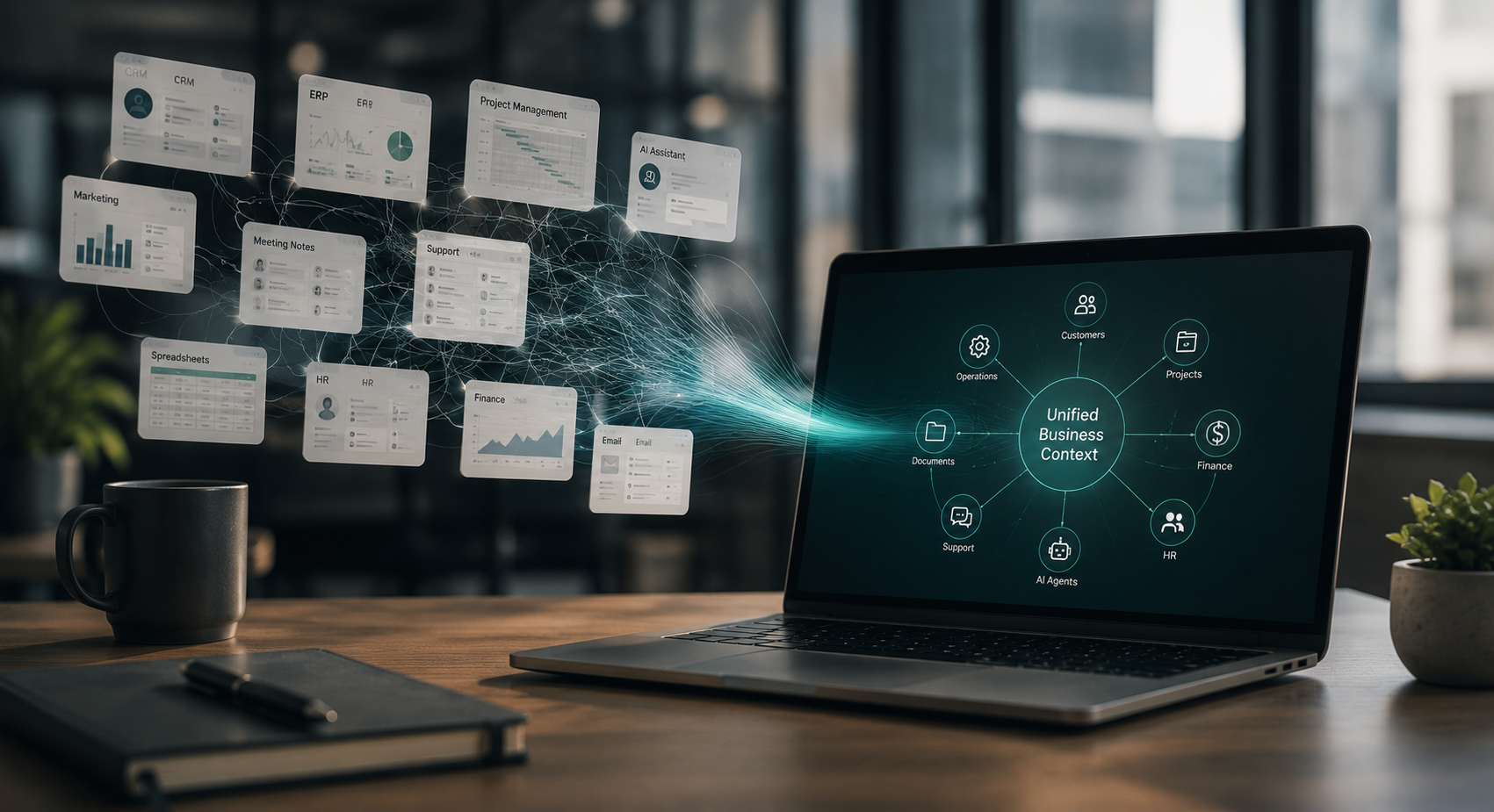
AI sales tools don't work for most teams because the model has no context about your business, your customers or the conversations you have already had, so it writes outreach that any competitor could have produced from the same three prompts. The fix is not a better model. It is

You get LinkedIn lead data without scraping by exporting your own account: LinkedIn's own Download your data tool gives you every 1st-degree connection and your full message history as a file you can keep. That archive is the only LinkedIn lead database you actually have a right

An AI agent for LinkedIn is a chat assistant like Claude or ChatGPT handed a set of tools that can read and act on your LinkedIn account. Connecting one is now the easy part, so the question that decides whether it is safe is narrower: what can the agent see, what can it send wit

To track LinkedIn leads without updating a CRM, stop asking anyone to log anything and let the account record the events that already happen. A connection accepted, a reply arriving, a meeting booked - each one moves that person a stage on its own evidence. The record stays accur

An AI sales agent with a human in the loop does the preparation - account research, list building, first drafts and follow-up timing - while a person approves each message before it goes out and takes over once someone replies. That is where sales teams are landing in 2026, and o

There is no fixed number. LinkedIn does not publish a daily or weekly connection request limit, and the ceiling moves with your account's age and standing, so the only safe amount is however many requests go to people likely to accept, sent slowly under a cap you set yourself. Th

Personalized LinkedIn outreach at scale still gets replies, but only when the personalization reflects a real relationship and real relevance - not when a tool mass-generates a thousand messages that merely look personal. The version that reliably works is narrow: take the networ

To find leads in your existing LinkedIn network, import the connections you already have and score each one against your ideal customer profile, rather than buying another cold list. For most small teams the best-fit buyers are already connected to them and have simply never been

To stop LinkedIn follow-ups after someone replies, the tool has to detect the reply and pause every queued message for that person on its own, so the moment a human answers, the automation gets out of the way. Reach does this by syncing your LinkedIn inbox, classifying replies, a

To turn your LinkedIn connections into a CRM, export your own network from LinkedIn (Settings and Privacy, then "Get a copy of your data"), and import that archive into a tool that holds your people and your message history in one place you can actually search. The export is the

You can run LinkedIn automation without getting banned in 2026 if the activity looks like a real person on their own account. LinkedIn's enforcement this year is behavioral, not just about volume, so what decides your risk is your session, your acceptance rate, and whether a huma

Yesterday, for the whole later part of the day, everything I run the company on went down. The AI services underneath the work - the ones I now lean on to draft, to research, to keep a long job moving while I do something else - just stopped. And the honest part is how much stopp

This week an AI assistant refused to do something I asked it to do on my own LinkedIn account. My login. My network. My say-so. It read the request, went partway, and then it stopped and told me no.

For two years I have been making it easy for a person to find us. The landing page, the reviews, the search terms, the posts. All of it built for a human who opens a browser, types a few words, reads, compares, and picks. Yesterday I watched a machine do the finding instead, and

I used to think the way to win a wary buyer was to make the product better. Add the feature they asked about. Tighten the pitch. Have a cleaner answer ready for the next objection. So that is what I did, for a long time. And the question that kept coming back was not about any of

I run a LinkedIn sales account. For most of the last year, running it meant opening the app. Log in, wait for it to load, click into campaigns, click into the inbox, check who replied, open a profile, read it, write the next message, schedule it, check the stats, close the tab. T

A hundred and ten people. Warm, first-degree connections, the kind that reply best of anything we have. This week our own tool decided not to message a single one of them, and it never told anyone. Nothing errored. Nothing turned red. The campaign just sat there looking fine.

A lead took our deck, pasted it into an AI, and asked it to find the holes. Then he sent us the holes.

I used to think a reply meant something. Someone wrote back, so the message worked. Count the replies, tune the opener, send more.

Someone on my team used to lose about half a day before every trade show. Not to selling. To getting ready to sell.

I gave up on that lead. I sent a note in December, he did not answer, and after a while I stopped thinking about him. In my head that thread was closed. Not angrily, not with a decision, just the quiet way a conversation ends when nobody writes back. I moved on to new names.

We build a tool that finds people and their phone numbers. This week someone on our own team sat down and called the list it produced, one number after another, and wrote down what happened on each call. That is the whole story. Not a study, not a benchmark - one person, a phone,

I send about forty LinkedIn messages a week, and for a long time I wrote them the way you are told to. A clean line about what we do. "We at Linkenite specialize in custom AI solutions to enhance business efficiency." I worked on that sentence. I moved the words around. I sent it

A partner asked me to sign an NDA this week, before we went any further. It came from a good place. He wanted to protect the thing we had built so nobody could walk off with it. And I said no. I want to be honest about why, because the reason is not the one you would expect, and

A founder I am already connected with wrote back to me this week and told me to stop.

POV: the buyer. Written from the other side of the inbox, using our own send data - the openers we wrote, the replies we got back, and the one that finally booked a meeting.

This morning I did something small before the standup. I opened my own LinkedIn inbox and I counted the pitches that got my name right and knew nothing else about me.


This morning my own team nearly went and bought phone numbers to cold-call strangers. I want to write that down before I talk myself out of how silly it was.

I sell a tool that sends LinkedIn messages. So this is a bit awkward to write.

I went through my LinkedIn inbox this morning and counted. There are messages in there from people who already said yes - happy to connect, nice to meet you, let's talk - that I have not answered in more than two weeks.

Everyone says AI killed outbound. The collapse everybody quotes is not in any dataset I could open. Gong's 28 million cold emails put the real price at 344 sends per meeting, and 6sense explains why: the buyer was not listening yet.


.png)
.png)
.png)
.png)
.png)











.png)

.png)


.png)




.png)






.png)



.png)

.png)


.png)


.png)


%20BLOG%20BANNER.png)


