.png)
Every company is now an AI company. Most are also discovering the bill.
Enterprises will spend roughly $340 billion on AI this year, according to Oxford Economics. Four out of five of those projects will not deliver measurable business value, according to a 2024 RAND Corporation report. That is twice the failure rate of conventional IT, and budgets are still rising.
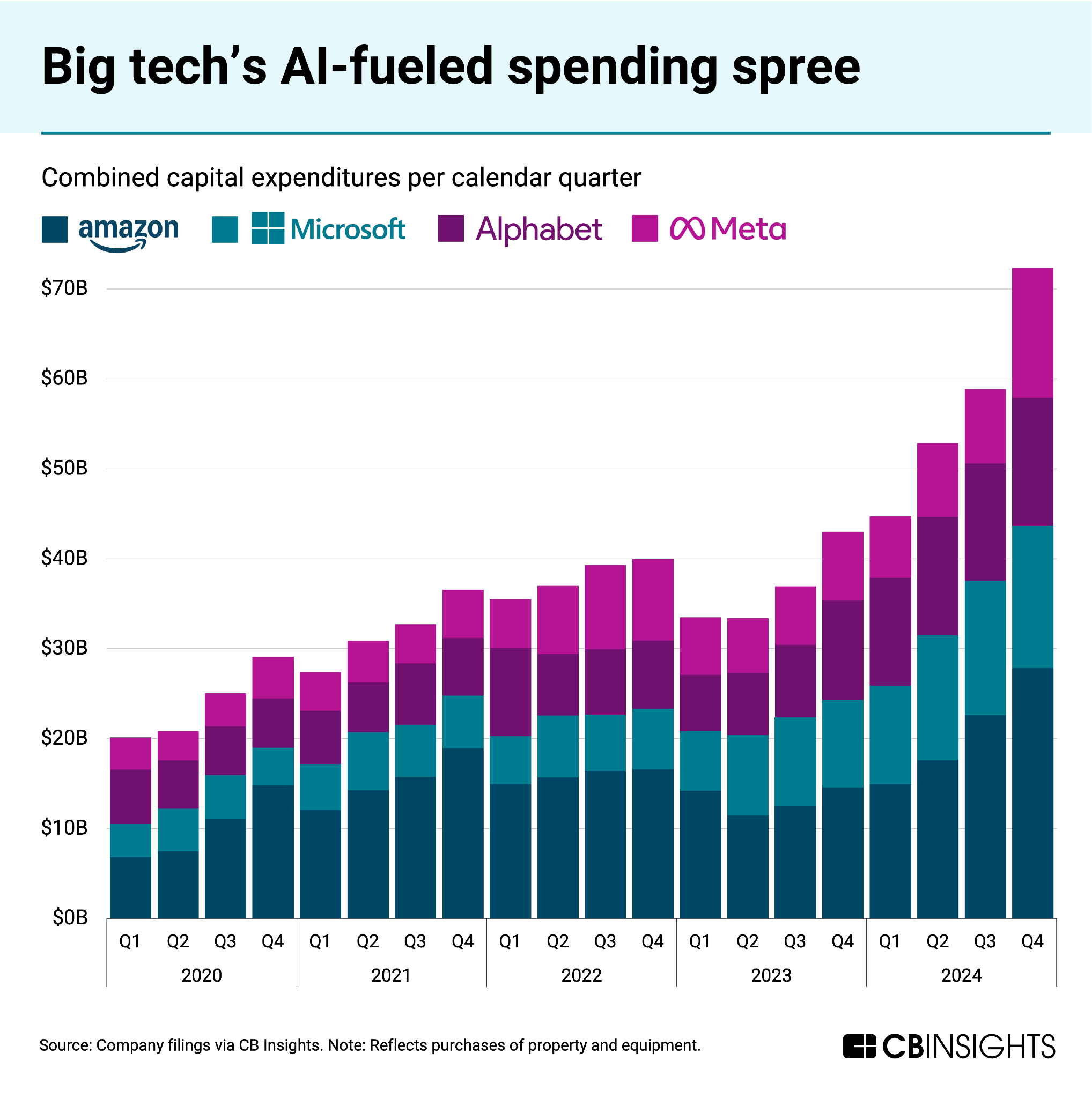
The technology itself is rarely the issue. The structure around it is. Companies have scaled up intelligence faster than they have scaled the operations needed to actually use it.
Cheap to create, expensive to manage
The first wave of AI made work dramatically cheaper to produce. Campaigns that used to take a week now take an afternoon. Outreach runs at scale. Internal reports practically write themselves. So far, so good.
The hidden cost shows up later, usually in the form of volume. Companies stop struggling to create work and start struggling to review, validate, and organize the output flowing through the business each day. A marketing team that once reviewed five ideas now has fifty in the queue. A sales team that automated outreach now spends a chunk of every week filtering low quality replies. Executives get more dashboards than they can read, let alone act on.
The bottleneck has moved. Coordination, not production, is now the expensive part.
AI is a real cost layer now, not a software line item
Most companies still budget for AI the way they budget for software. In practice, it behaves more like infrastructure. Behind even simple workflows sits a stack of inference calls, API consumption, context processing, and overlapping platforms running in parallel across departments. One team uses ChatGPT. Another standardizes on Claude. Sales picks up an AI prospecting tool. Meetings generate automated summaries. Most companies never connect any of it.
A 50-person revenue team running five overlapping AI tools can clear five figures a month in run rate before anyone has measured a single consolidated productivity gain. The teams running those stacks usually cannot tie output back to spend.
That is where the visibility problem starts. Companies stop being able to tell whether AI is reducing cost, or just moving inefficiency from one part of the business to another.
More AI is not the same as more value
The companies spending the most on AI are not always the ones getting the most out of it.
For two years, AI adoption was measured by capability. Faster models, bigger systems, broader rollout. Operationally, more intelligence rarely creates more leverage on its own. It often creates more drag. More tools mean more disconnected workflows. More generated output means more review cycles. More automation means more systems someone has to maintain.
A lot of companies thought they were automating the work. What they actually automated was the overhead around it.
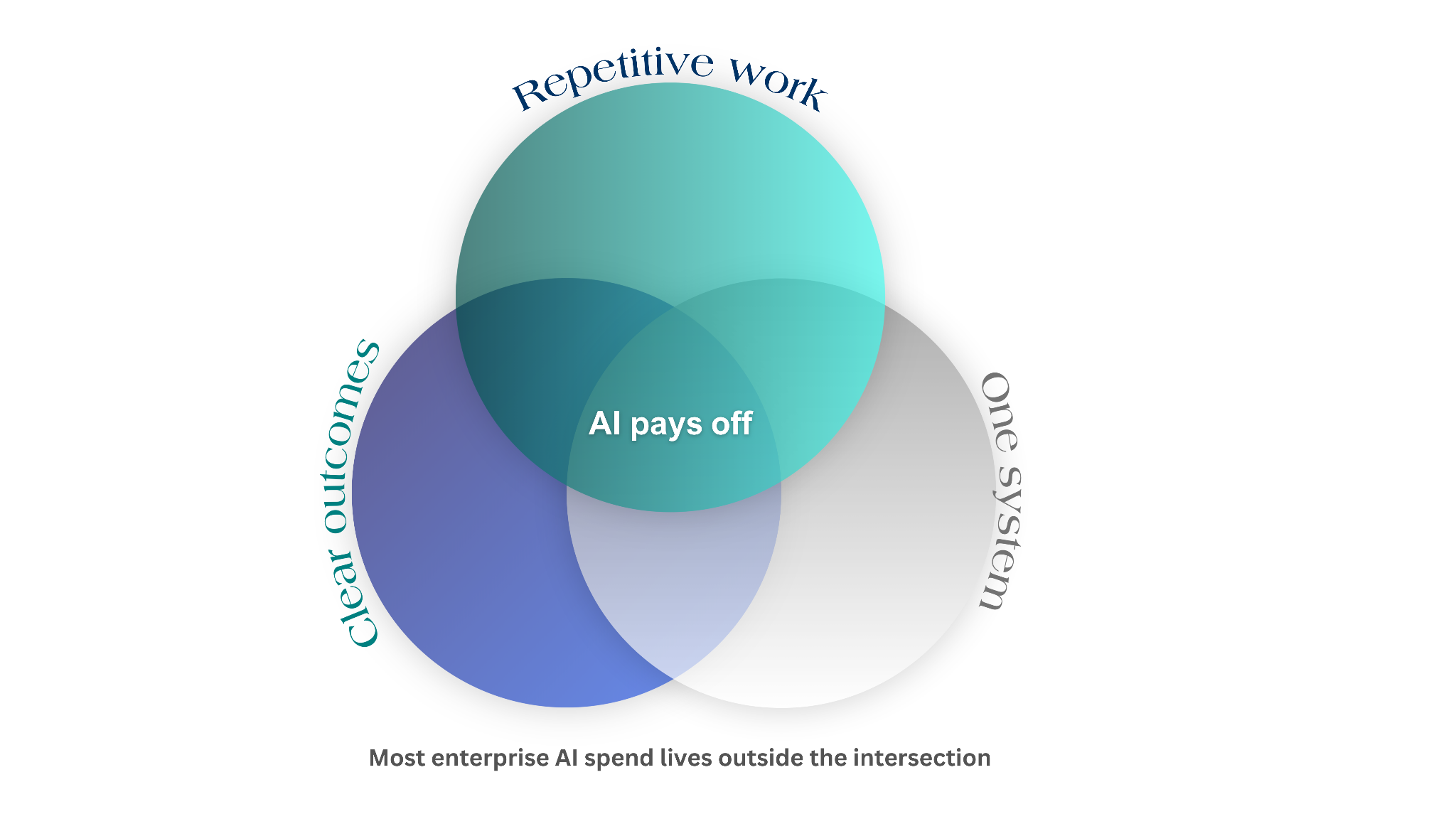
What the disciplined companies are doing
A smaller group of operators is running a different playbook, and five practices show up over and over.
They audit AI sprawl by function rather than by tool, which almost always surfaces overlapping subscriptions and unused capability across departments. They centralize the inference layer so usage and cost can be measured in one place instead of scattered across vendors. They measure cost per outcome rather than cost per token, because what matters is the business decision or revenue motion the AI produced, not the model bill. They keep humans in the loop where judgment matters and automate aggressively where friction lives. And they build reusable agentic systems rather than one off automations that end up creating the same sprawl the audit was meant to fix.
Operational discipline is the real edge
AI access is becoming a commodity. The models will keep improving, the infrastructure will keep scaling, and access alone will stop being a competitive advantage. What will matter is the discipline around it. Knowing where automation creates leverage, where human judgment is still cheaper, and where AI is just buying expensive complexity.
The companies that win the next few years probably will not be the ones with the biggest AI stack. They will be the ones with the most intentional systems around it.
That is the work Linkenite is built around. Designing agentic AI systems that help companies scale output, automate revenue operations, and remove operational friction without creating new complexity underneath.
The next phase of advantage will not come from adopting AI faster. It will come from building AI systems that actually scale.


.png)
.png)
.png)
.png)
.png)
.png)
.png)
.png)
.png)
.png)
.png)
.png)

.png)
.png)
.png)
.png)


.png)
.png)

.png)


.jpg)

.jpg)
.jpg)


.png)


.png)

.png)
.png)
.png)


.png)
%20(2).png)
.png)
.png)




.png)

.png)


.png)


.png)


.png)


%20BLOG%20BANNER.png)


.png)