
When AI entered the content world, it did not arrive quietly. Almost overnight, writing became faster, cheaper, and endlessly scalable. Blog posts, social updates, emails, and landing pages could be produced in minutes instead of days. The barrier to publishing collapsed.
And yet, something subtle happened alongside this progress.
Content did not become worse. It became easier to ignore.
This blog exists to explore why that happened, and why human judgment has quietly become the most important differentiator in an AI-first content landscape.
AI lowered the cost of content, not the responsibility behind it
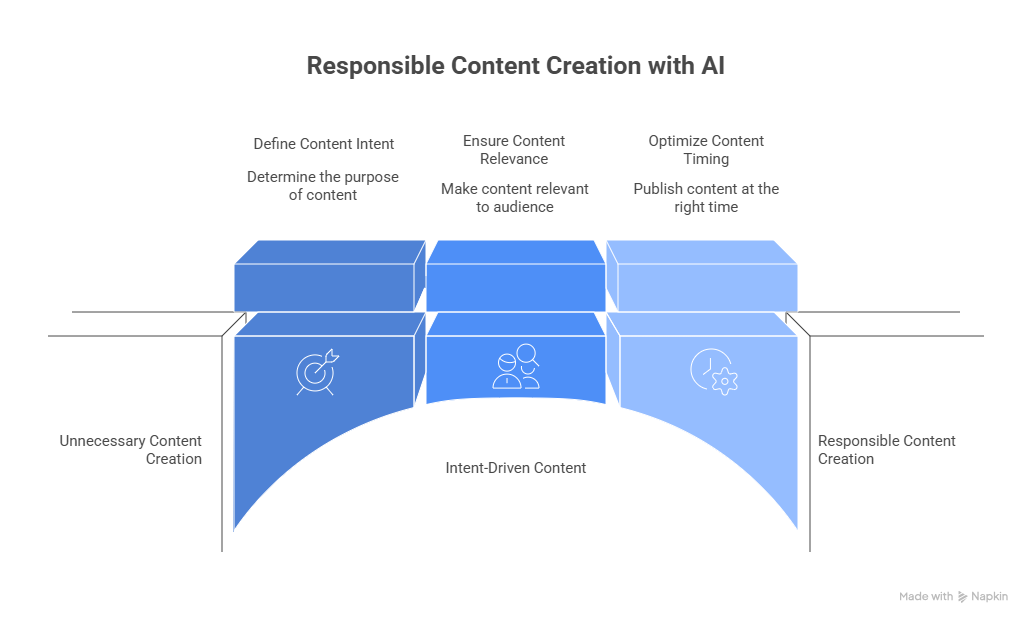
AI fundamentally changed how content is produced. It reduced effort, accelerated drafts, and removed many operational bottlenecks. For teams, this was liberating. Ideas could be explored faster, formats could be tested cheaply, and publishing no longer felt heavy.
But AI did not change why content works.
Content still succeeds or fails based on intent, relevance, and timing. AI can generate words, but it cannot decide whether an idea deserves attention in the first place. That decision sits outside automation.
The most important question today is no longer “Can we create this?”
It is “Should this exist at all?”
That question requires judgment.
Why readers disengage without knowing why
Most people cannot articulate why a piece of content feels forgettable. They simply sense it.
It reads fine.
It makes logical points.
It explains the topic clearly.
And yet, nothing sticks.
This is the most common failure mode of AI-assisted content today. Not errors. Not misinformation. But indifference.
When judgment is missing, content becomes interchangeable. It feels like it could have been written for anyone, by anyone. Readers do not reject it consciously; they simply move on.
Over time, this erodes trust. Not because the content is bad, but because it lacks a clear point of view and intent.
When content became cheap, judgment became rare
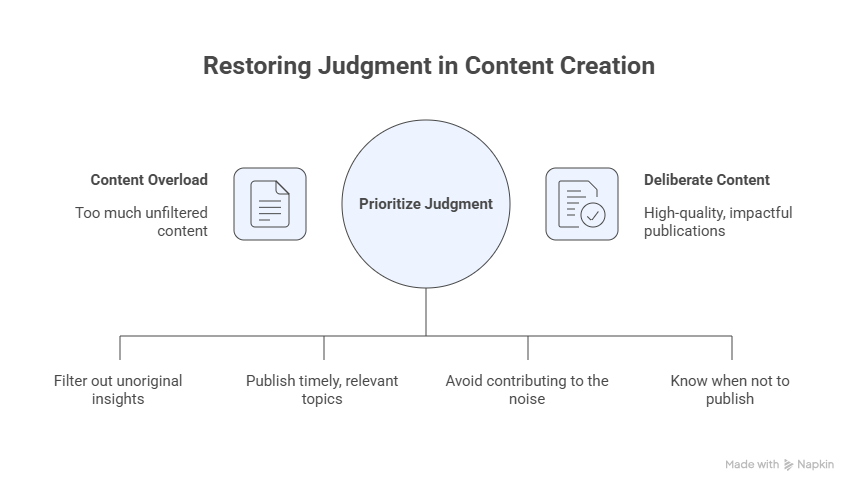
Before AI, content had natural friction. Writing took time, editing required effort, and publishing involved coordination. That friction acted as a filter. Ideas were refined, fewer things shipped, and decisions were deliberate.
Today, that filter is gone.
As a result, the teams that stand out are not the ones producing the most content. They are the ones making better decisions about what to publish, when to publish, and when to stay quiet.
Judgment now determines:
- Whether an insight is original or merely well-worded
- Whether a topic is timely or already exhausted
- Whether publishing adds clarity or contributes to noise
- Whether silence is a better choice than speed
These are not algorithmic decisions. They are human ones.
Why judgment cannot be automated
AI is exceptional at recognizing patterns. It knows what has worked before, what typically performs, and how successful content usually sounds.
What it does not understand is context.
AI cannot feel audience fatigue, brand overexposure, or emotional timing. It cannot sense when a message has been repeated too often or when restraint would build more credibility than visibility.
Judgment lives in these gray areas. Decisions like whether to wait, simplify, cut back, or say nothing at all shape how a brand feels over time. Those decisions require responsibility, not just intelligence.
What human-first AI looks like in practice
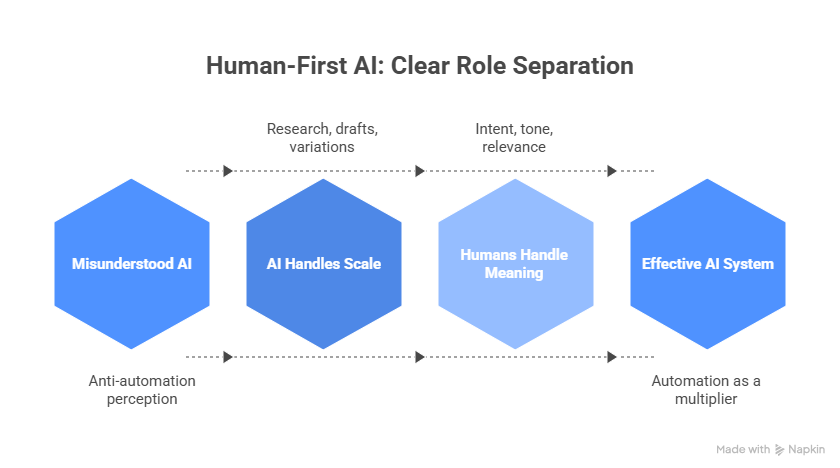
Human-first AI is often misunderstood as being anti-automation. In reality, it is about clear role separation.
In effective systems:
- AI handles scale: research synthesis, first drafts, variations, and exploration
- Humans handle meaning: intent, tone, relevance, timing, and restraint
AI proposes possibilities. Humans make commitments.
This philosophy shapes how teams at Linkenite design content and automation workflows. The goal is not to remove humans from the loop, but to remove unnecessary busywork so judgment can be applied where it matters most.
Automation becomes a multiplier. Judgment remains the compass.
Why this matters for long-term credibility
Short-term attention can be driven by volume. Long-term trust cannot.
Audiences return to brands that feel intentional, consistent, and thoughtful. Even when AI is deeply embedded behind the scenes, readers can sense when content has been considered rather than simply produced.
They may not know exactly why a piece feels different. They just know it does.
That consistency of judgment compounds over time, shaping voice, credibility, and trust far more than publishing frequency ever could.
The real advantage in an AI-first world
In today’s content landscape, speed is common, automation is expected, and optimization is table stakes.
The real advantage is human judgment.
It shows up in what you choose not to publish, how clearly your perspective comes through, and how little your content sounds like everyone else. AI can help teams move faster, but only humans can decide whether moving faster is the right move at all.
At its core, this belief is what guides how we think about AI at Linkenite: not as a replacement for judgment, but as a tool that makes space for it.
In a world overflowing with content, that may be the most valuable signal you can offer.


.png)
.png)
.png)
.png)
.png)
.png)
.png)
.png)
.png)
.png)
.png)
.png)

.png)
.png)
.png)
.png)


.png)
.png)

.png)


.jpg)

.jpg)
.jpg)


.png)


.png)

.png)
.png)
.png)


.png)
%20(2).png)
.png)
.png)




.png)

.png)


.png)


.png)


.png)


%20BLOG%20BANNER.png)


.png)