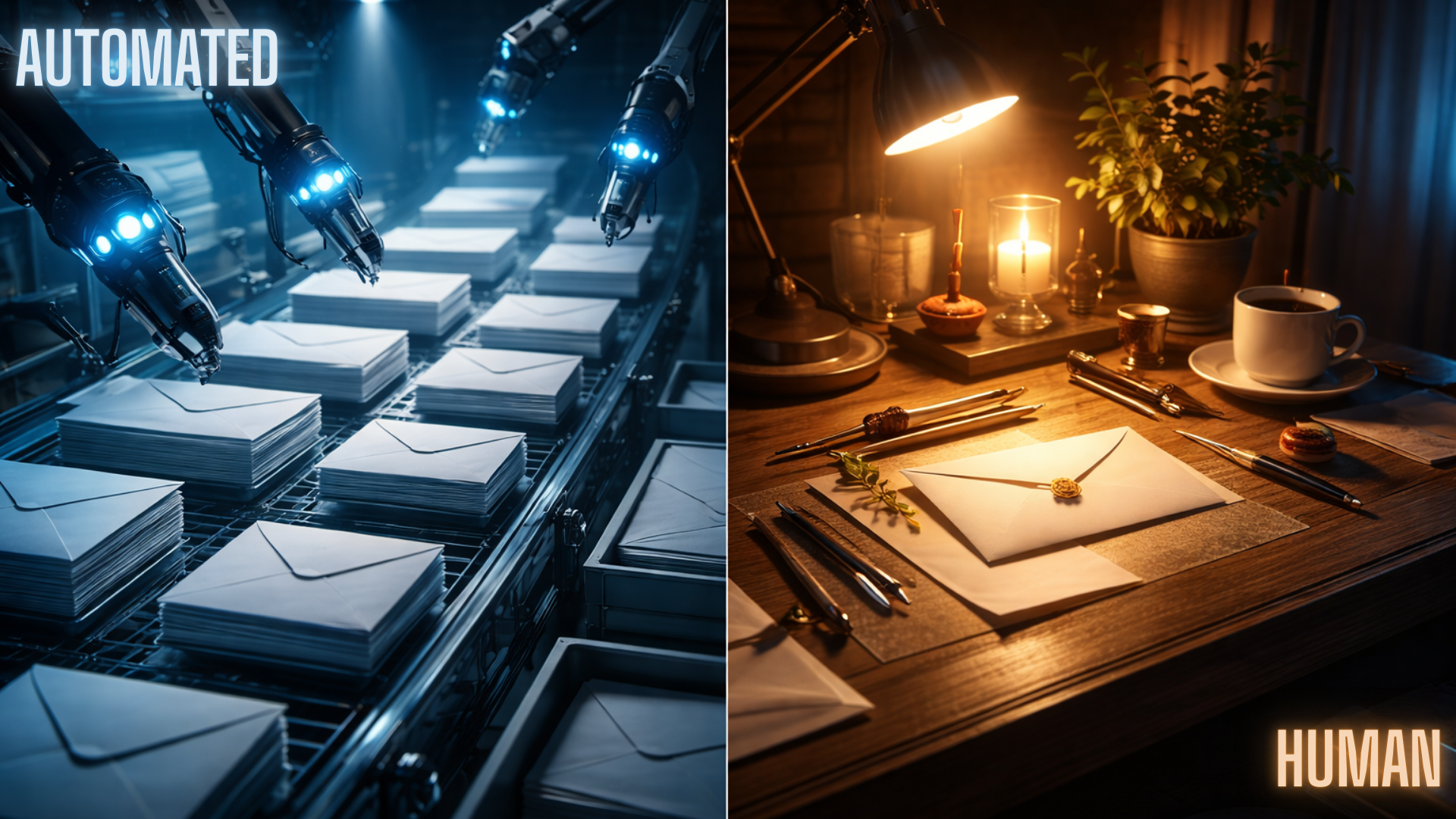
At 9:07 AM, Steve opens his inbox before his first meeting. There are unread emails, internal threads, and a few newsletters he never signed up for. One cold email stands out, not because it is bad, but because it starts exactly how he expects: “Just following up…” He reads the first line, scrolls once, and moves on. Replying feels optional.
A few kilometres away, Maya schedules a follow-up she carefully wrote three days ago. She personalised the opening line. She followed the best practices. She hit send and now waits.
This gap, between effort on one side and silence on the other, is where most outreach quietly breaks today. This blog exists to explain why good outreach doesn’t feel automated, even when automation is involved, and what human-feeling outreach actually looks like in practice.
Why people sense automation almost instantly
Most teams assume automation is detected through obvious mistakes. Wrong names. Generic openings. Broken personalisation. In reality, automation is sensed through patterns.
People notice when:
- Follow-ups arrive at perfectly spaced, mechanical intervals
- Messages ignore previous silence or subtle signals
- Sequences continue even after interest fades
- Every email pushes instead of responding
Nothing is technically wrong, but something feels off. Automation becomes visible the moment awareness disappears, and awareness is what makes communication feel human.
What actually breaks trust in cold emails
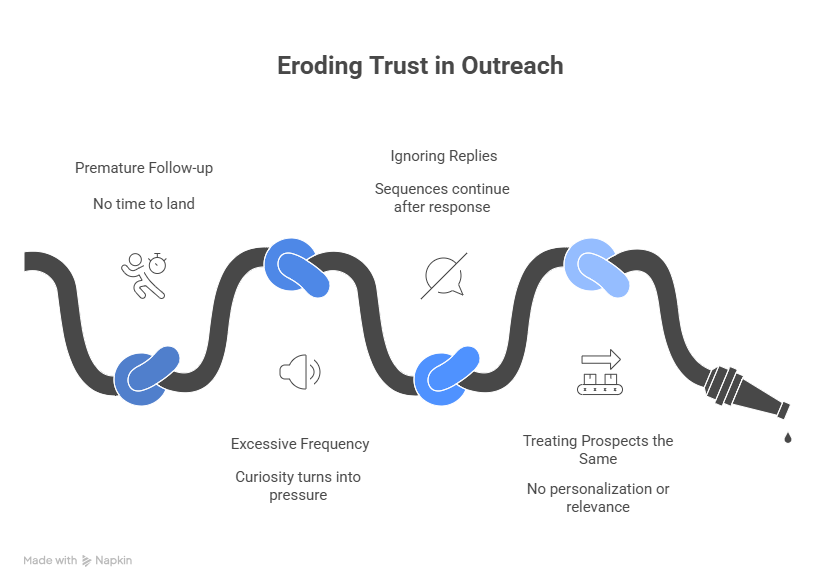
Trust in outreach rarely collapses because of one bad message. It erodes through repetition without context. The most common trust breakers are surprisingly simple.
They include:
- Following up too quickly, before the first message had time to land
- Following up too often, turning curiosity into pressure
- Continuing sequences after a reply has already been sent
- Treating every prospect exactly the same
From the sender’s side, this feels like persistence. From the receiver’s side, it feels like noise. Once outreach feels noisy, people disengage not just from one email, but from future ones too.
Why timing, relevance, and restraint matter more than copy
Most outreach advice focuses on what to say. Very little attention is paid to when not to say anything at all. This is where human-feeling outreach separates itself.
Good outreach respects three things:
- Timing, because silence often means busy, not uninterested
- Relevance, because context decays quickly if it is not refreshed
- Restraint, because knowing when to pause builds more trust than endless nudging
These are not copy decisions. They are judgment decisions. And judgment is where most automation falls short.
How outreach can scale without sounding robotic
Scaling outreach does not require removing humans from the loop. It requires removing busywork so humans can apply judgment where it matters most. This is the design philosophy behind InboxIN by Linkenite.
InboxIN is built around human-aware automation:
- Outreach automatically pauses the moment someone replies
- Follow-ups are spaced intentionally, not aggressively
- Conversations are prioritised over volume
- Humans remain in control of tone, intent, and next steps
Automation handles execution. Humans retain responsibility. That balance is what keeps outreach feeling considered rather than automated.
Why human-feeling outreach performs better over time
Human-feeling outreach does not optimise for immediate replies alone. It optimises for conversation quality. When outreach feels considered, replies feel natural instead of defensive, and conversations progress instead of resetting.
Even when the answer is “not right now,” trust remains intact. Over time, that trust compounds. People remember how an interaction felt, and when timing changes, they are far more likely to reply to someone who respected their attention earlier.
The everyday AI moment most teams miss
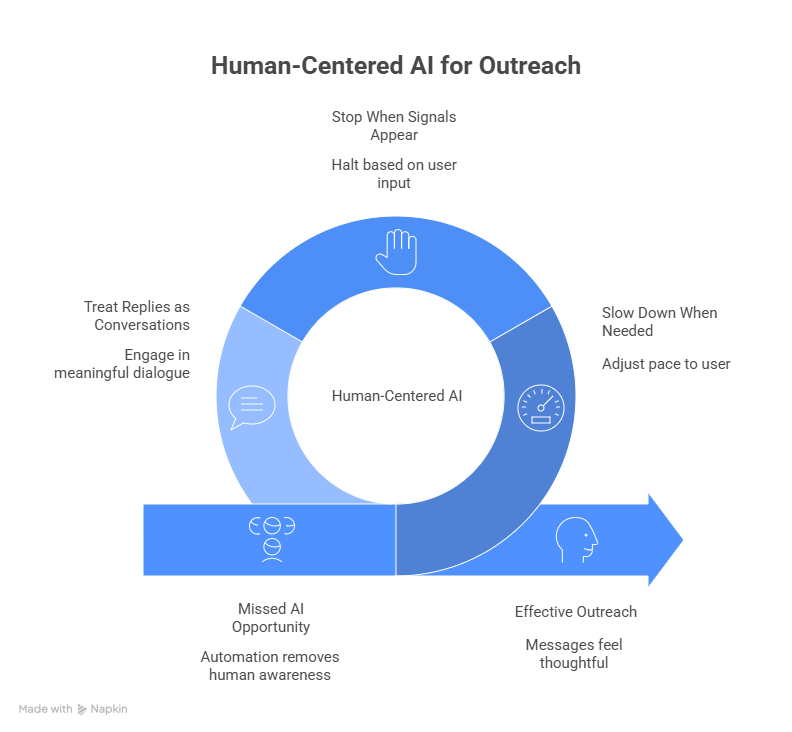
Automation does not fail because it exists. It fails when it removes awareness. The best outreach systems do not try to sound human. They behave like humans.
They slow down when needed.
They stop when signals appear.
They treat replies as conversations, not checkpoints.
At Linkenite, this belief shapes how InboxIN is built. AI supports timing, prioritisation, and scale, while humans remain responsible for judgment and intent. Because good outreach is not about sending more emails. It is about making each message feel like someone actually thought before hitting send.
The takeaway
Good outreach doesn’t feel automated. It feels considered. It respects attention, adapts to silence, and values restraint as much as persistence. In a world where inboxes are crowded and patience is thin, that consideration is often the difference between being ignored and being answered.
That is not a feature.It is a philosophy


.png)
.png)
.png)
.png)
.png)
.png)
.png)
.png)
.png)
.png)
.png)
.png)

.png)
.png)
.png)
.png)


.png)
.png)

.png)


.jpg)

.jpg)
.jpg)


.png)


.png)

.png)
.png)
.png)


.png)
%20(2).png)
.png)
.png)




.png)

.png)


.png)


.png)


.png)


%20BLOG%20BANNER.png)


.png)